Events, actions, conditions, repeats, and behavior commands
Author movement, collision, UI, camera, save, RPG, audio, effects, 3D, and network logic through readable rules and typed pickers.
 Myth Engine
Log in
Start free
Myth Engine
Log in
Start free
Current feature map
Myth Engine brings visual authoring, focused editors, game-ready systems, real code access, the Babylon.js runtime, and practical export into one local Windows workflow.
Readable by design
Visual events are not a separate toy layer. Every action offered for authoring has a runtime implementation, and the same project can mix object-only rules, reusable behaviors, data, and JavaScript.
See the editor workflow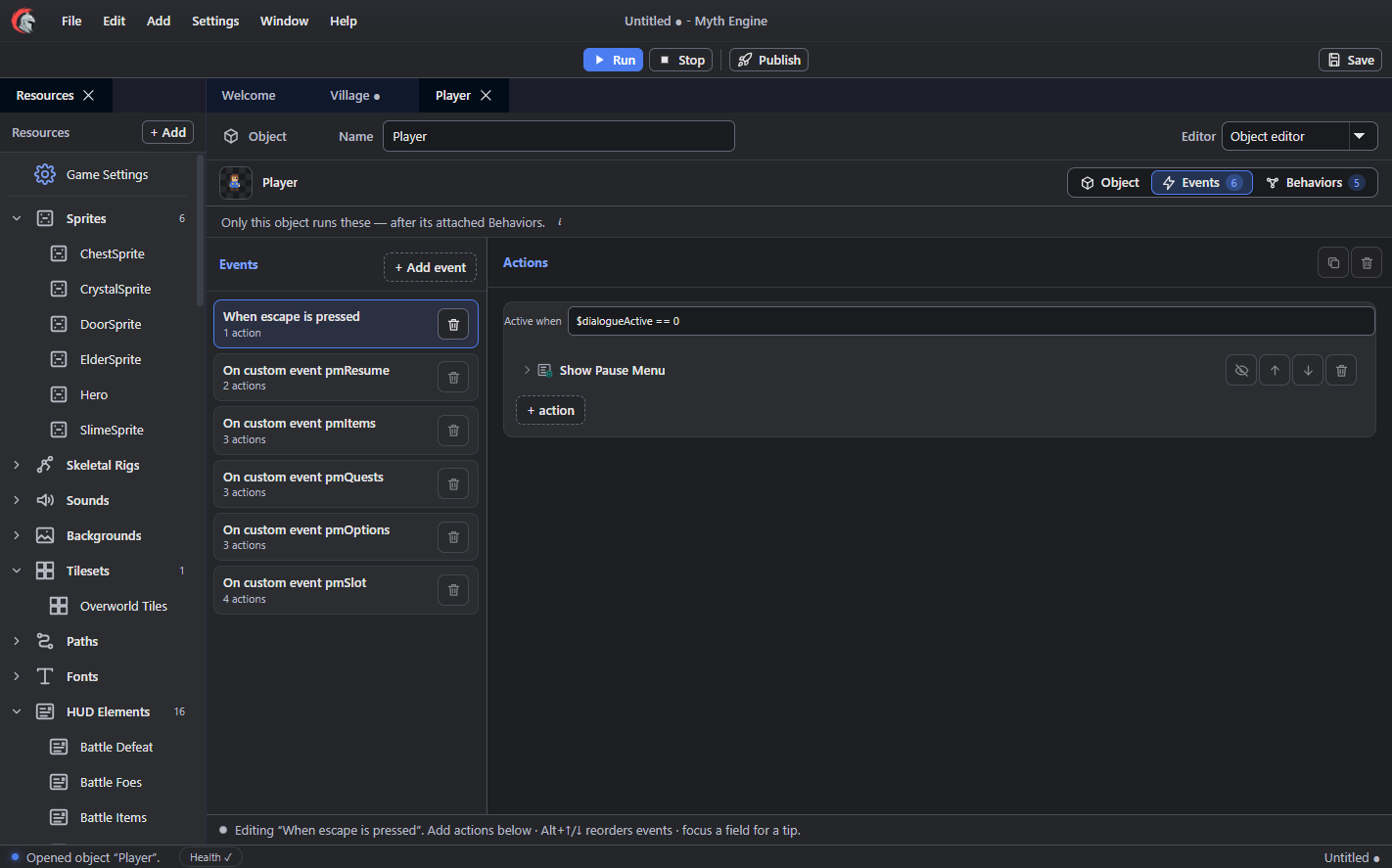
Core systems
25 resource types
Every type has a focused editing surface, a predictable data shape, and a place in the same resource tree.
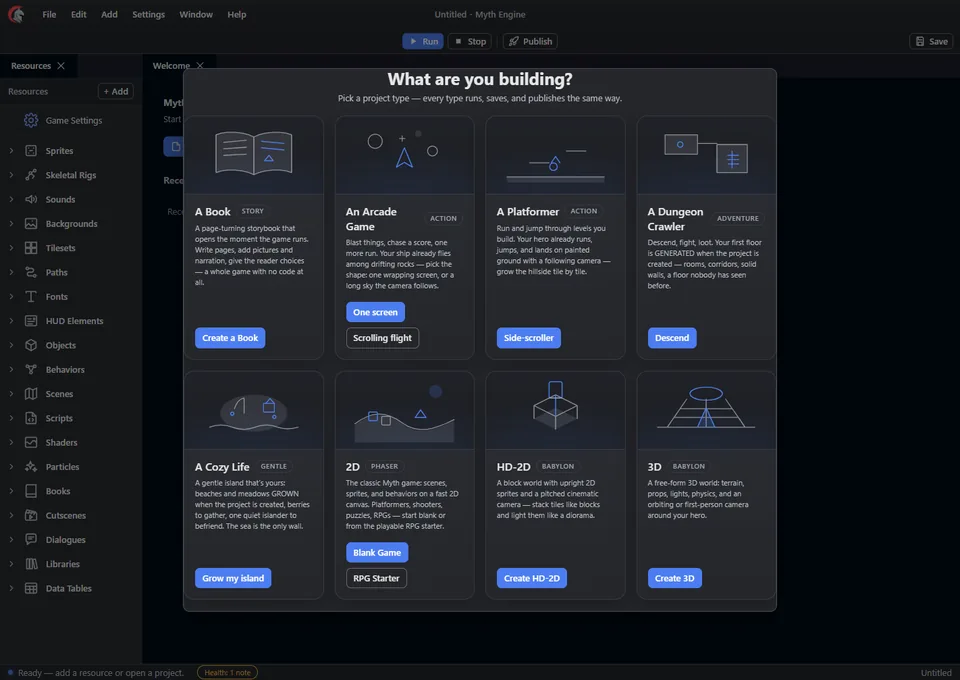
Nine playable starting points
Every project begins as a running game you can inspect and replace. These images come from current Myth starter projects built and run through the same playtest path creators use. They show the starting point before custom art and design—not a finished customer game.
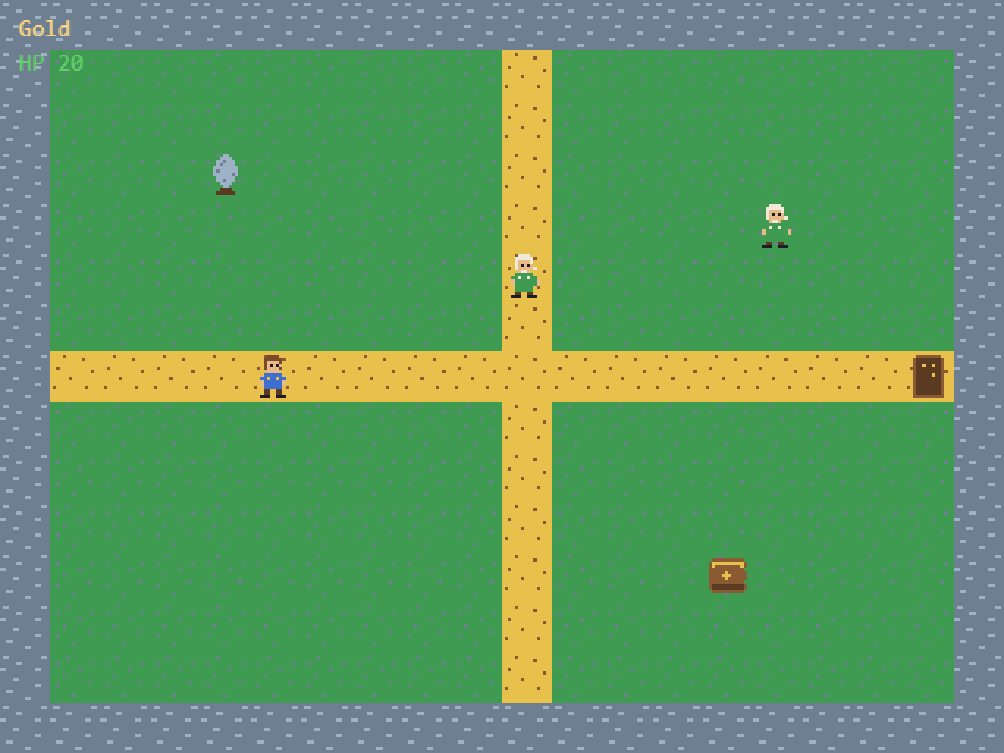
RPG Adventure
Begin with grid movement, camera follow, NPC interaction, a chest, shop, save crystal, and a second map reached through a door.
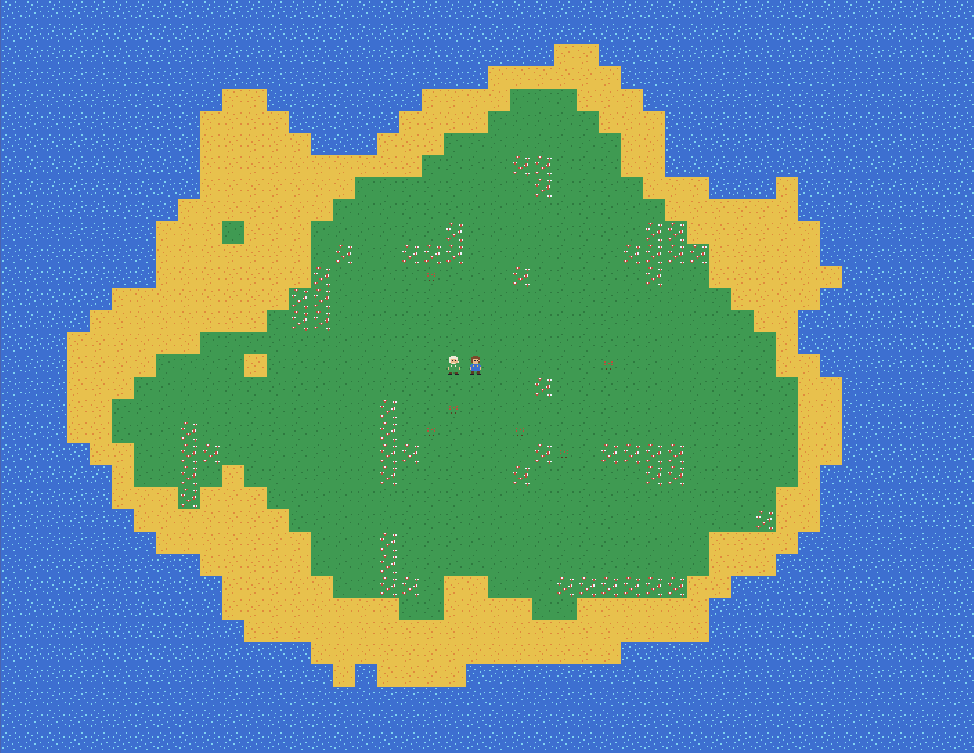
Cozy: Your Island
Walk a noise-shaped island, pick berries, talk with Wren, and step through the cottage door. The generated shore becomes the natural boundary.
Choose the loop you want to learn from
Every option begins as a playable project. A blank project remains available when you want to add every resource by hand.
Grid walking, NPCs, loot, a shop, saving, and a second map through a working door.
A generated island with berries, an islander, a cottage, and a shoreline that changes with every project.
A turn-based mystery dungeon: generated floors, tactical corridors, items, hunger, traps, fog and minimap, XP, and a persistent upgrade camp.
Run and jump across solid painted tiles, collect coins, avoid spikes, reach the flag, and climb a second level.
Fly a wrapping screen, shoot rocks for score, lose ships on impact, and face repeating waves.
Fly up a long scrolling sky, shoot hazards, keep score, and preserve your remaining ships.
Open directly into five written pages, a painted picture, and a choice that branches to two endings.
Explore a block meadow, walk behind and climb walls, gather gleams, talk with an Elder, and save.
Move through a fogged 3D course with gravity, props, collectible gems, and an orbiting camera.
Publishing
Myth validates references, packages the runtime and project data, and writes output you can inspect, host, send, or continue packaging with standard tools—without a proprietary player, a mandatory Myth hosting service, or an engine royalty attached to your success.
Self-contained output with the game data and runtime inside one file for quick sharing, local demos, classroom delivery, and simple distribution.
Export index.html plus assets for itch.io, Netlify, GitHub Pages, your own server, or another static host.
Useful when runtime file size matters more than fully offline playback.
Generate Electron, Tauri, or Capacitor source projects. Signing, accounts, privacy forms, ratings, and submission remain the publisher's job.
Projects using net features can include relay files for rooms, messages, synced objects, and lockstep play.
A valid paid license lets creators sell Myth Engine exports without paying Myth Engine royalties, while still managing rights for imported assets and libraries.
Exports load and decode the resources a scene needs, release unused resources on scene changes, and expose memory and loading controls in Game Settings.
Single HTML and bundled web exports can run without fetching the game engine from the internet. CDN HTML is an explicit smaller-file alternative.
Desktop and mobile source exports include publisher guidance for the packaging, signing, store, and platform steps that remain yours.
Solo developers, students, hobbyists, game-jam creators, RPG makers, story-game builders, web-game publishers, and small teams that value visual workflow plus code access.
The editor, Help Center, guided lessons, samples, and vendored runtimes work locally. Projects remain ordinary files you can back up and version.
Storefront accounts, final app signing, certificates, ratings, and third-party asset rights remain with the publisher—and Myth says so before export.
No feature gate in the trial
Build and playtest locally with every editor and starter. Purchase only when you are ready to create distributable exports.